Shining a Light on Pet Pain Relief: Laser Therapy
Why Does My Pet Need Laser Therapy?
With so many options and products being advertised for our pet’s pain relief, it's important to understand the science behind your options. One such option is to use laser therapy, also known as photobiomodulation therapy (PBM) or Low-Level Laser Therapy (LLLT). While the name might sound complex, the concept is beautifully simple: healing with light. Laser therapy is often prescribed as an adjunctive therapy for pets suffering from chronic pain, recovering from surgery, or struggling with mobility issues like arthritis (for cats and dogs).
For decades, this therapy struggled for recognition, often being misunderstood. However, thanks to extensive research, we now have a solid scientific understanding of how it works, leading to its widespread adoption in modern veterinary practice. This therapy is not the “hot” laser you might think of shooting beams or heating up, instead it’s often referred to as ‘cold’ laser therapy because it is a safe, non-thermal light.
How It Works
Laser therapy works at the cellular level — think of light energy as a microscopic fuel source. When the specific wavelengths of light are applied to your pet’s body, the cells absorb this energy, particularly in the part of the cell called the mitochondria (the cell's power plant). This absorption kick-starts a beneficial chain reaction, essentially "powering up" the cell’s natural healing and repair mechanisms. This is the foundation for why a single, brief exposure to light can have long-lasting effects — hours, days, or even weeks — a phenomenon known as "retrograde mitochondrial signaling."
Laser therapy targets the root causes of discomfort and delays to healing. This therapy has been shown to reduce inflammatory markers. This means there is a rapid and non-invasive reduction in inflammation for our pets that goes deeper than surface-level relief. By calming the "overactive" immune cells that cause swelling and pain, laser therapy offers arthritis pain relief when added to a pet’s medication protocol and other recommended therapies.
Laser therapy, or photobiomodulation, provides focused, coherent laser light for deep tissue penetration and precise targeting of joints and muscles, which can treat conditions including arthritis pain, pain from intervertebral disc disease (IVDD), and healing of open wounds or surgical incisions. This differs from standard red light therapy that uses shallower LED light that is unable to penetrate into deep tissues.
Would Laser Therapy Be a Good Fit for My Pet?
The applications for laser therapy (photobiomodulation) are incredibly broad. Often prescribed for chronic painful conditions such as osteoarthritis, intervertebral disc disease (slipped disc), and degenerative joint disease. It can also be used to accelerate recovery from acute conditions such as orthopedic or soft tissue surgery, skin or ear infections, or wounds. It can reduce pain and swelling, allowing your pet to get back on their feet faster. We also use it to enhance wound healing, treat infections, and even help with muscle strains or injuries sustained during athletic activities, as research has shown its capacity to improve muscle performance and reduce tissue damage. You should ask your vet to see if laser therapy could be recommended for your pet.
What To Expect
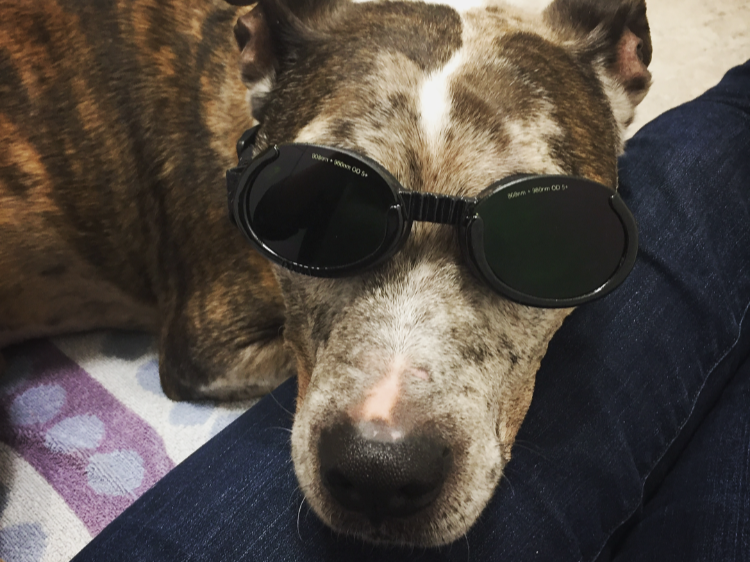
If you are considering laser therapy, you can expect a completely pain-free and non-invasive procedure. Laser therapy can be done in a clinic setting with a trained technician, in your home with a veterinary team, or through a prescription program that allows you to administer the therapy at home. During a session, your pet can relax while the device is used over the affected area. The therapy may be soothing, and because the process is non-thermal, there is no heat or discomfort. The most important factor for success is the protocol—the correct wavelength and energy dose are vital, which is why having guidance from a veterinary professional is essential. Protocols depend on your pet's condition, severity, and area to ensure maximum efficacy.
If you’ve been searching for a therapy to add into your pet’s pain management protocol or your pet cannot tolerate pharmaceutical therapy, consider laser therapy to enhance your pet’s comfort and mobility. By reducing inflammation, relieving pain, and accelerating healing at the cellular level, laser therapy or photobiomodulation can assist your pet in experiencing a higher quality of life.
If you are interested in adding laser therapy to your pet’s pain management, you can schedule a virtual consultation. For local pet guardians, we can also provide in-home care including acupuncture. During virtual consultations, we will review your pet’s medical records, discuss their current health status, and come up with the best set of options for you and your pet. For pet guardians, we can provide in-home care including acupuncture.